EVENTS and PROGRAMS
Calendar of Events
Distinguished Historians Forum
ONLINE RESEARCH RESOURCES
Palisade History Project
Focus on Palisade History
Palisade Biographies
Collections Catalog
PPS NEWS
Employment Opportunities at PPS
Fellowships in Nevada History
PPS - Awards and Honors
PPS Membership Discontinued
RELATED ORGANIZATIONS
Nevada Historical Society
Nevada Labor History
Howard Hickson's Histories
Univesity of Nevada, Reno |
History of Palisade, Nevada
by Greg Dennis, Nevada Historian
Crafted out of the dirt of the Old West, Palisade was founded by a young patriot and abolitionist named William Howard East, affectionately known as "Willy". Part of the Underground Railroad and disenchanted by the ongoing American Civil War, Willy East became stoutly fascinated with creating a safe haven out West for freed slaves. Furthermore, East saw a world filled with intolerance towards a variety of races, religions and singular thinkers even in the so-called "Free States".
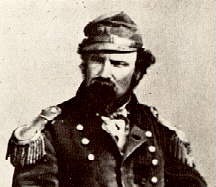 East's dream of a sanctuary came to fruition during a trip to San Francisco when he met Joshua Abraham Norton, an eccentric resident who had declared himself "Emperor of the United States" in September of 1859. Emperor Norton I, as he liked himself to be described, knew of some vacant land holdings in northern Nevada running along side the soon-to-be-completed transcontinental railroad. Legend has it that East met Norton whilst playing cards in nearby trading town. Norton was keenly interested in East's plan to create a refuge for the outcast and downtrodden, and offer up the tip which would eventually lead East to the land he would dub Palisade. East's dream of a sanctuary came to fruition during a trip to San Francisco when he met Joshua Abraham Norton, an eccentric resident who had declared himself "Emperor of the United States" in September of 1859. Emperor Norton I, as he liked himself to be described, knew of some vacant land holdings in northern Nevada running along side the soon-to-be-completed transcontinental railroad. Legend has it that East met Norton whilst playing cards in nearby trading town. Norton was keenly interested in East's plan to create a refuge for the outcast and downtrodden, and offer up the tip which would eventually lead East to the land he would dub Palisade.
In 1865, Willy East arrived at a plot of vacant land surrounded by sheer walls of mountain bluffs. A common descriptive word of these kinds of bluffs was "palisade". Traveling with Willy was a freed slave, a schizophrenic prospector, a young Chinese boy, and a rabbinical student. Together, these men blazed the path and built the rudiments of a town which would soon host an eclectic mix of races, religions and free-thinkers.
Palisade's first entrepreneurial success can in the form of a toilet, believe it or not. As a rest stop for passengers traveling on the Central Pacific line to and from San Francisco, Palisade attracted some of its first customers. Local shops sprung up, supported by the initial "toilet tourism" boom. Palisade vendors earned a decent living selling everything from baked goods to custom-made stagecoaches.
Already a widower, Willy East was murdered by a gunslinger after quarrelling over the price of manure (an offshoot business of Willy's outhouses). Willy's two sons, Ignatius and Wayne, were orphaned.
Years passed by and the advent of onboard train lavatories put a dent in Palisade's tourism. Then, one day Wayne East was leaning against a post at thee railroad depot when the noon train from the east arrived. Passengers stepped from the cars to eat lunch as Ignatius East approached his younger brother -
"There ya are, ya lowdown polecat!," screamed Ignatius. "I'm gonna kill ya for what ya done to my pore little sister!"
 Ignatius quickly drew his revolver. Cocking it, he took careful aim and fired. Wayne clutched his chest, screamed in agony and fell to the dusty ground. He writhed in pain the last two or three seconds of his life. Over in seconds, the battle must have lasted for what seemed hours to the frightened train passengers. None seemed to have an appetite left and most weakly climbed back into the cars. Few had the guts to look out the windows. Some, still shaken by the scene they witnessed, crouched on floors and behind seats. They all breathed a collective sigh of relief when the engineer signaled with the whistle that the train was ready to leave. Ignatius quickly drew his revolver. Cocking it, he took careful aim and fired. Wayne clutched his chest, screamed in agony and fell to the dusty ground. He writhed in pain the last two or three seconds of his life. Over in seconds, the battle must have lasted for what seemed hours to the frightened train passengers. None seemed to have an appetite left and most weakly climbed back into the cars. Few had the guts to look out the windows. Some, still shaken by the scene they witnessed, crouched on floors and behind seats. They all breathed a collective sigh of relief when the engineer signaled with the whistle that the train was ready to leave.
When the caboose disappeared behind the first curve out of town, the people of Palisade began laughing and continued to guffaw for three more years. This was their first performance, an act they put on for tenderfoot rail travelers more than one thousand times before tiring of the joke. Yep. The whole town was a hoax.
Variations of the original hoax continued. Sometimes there was a bank robbery with a noisy shootout between the sheriff, his posse, and the robbers. Another time local Shoshones were drafted to "massacre" the townspeople, especially those near the depot. The massacre was a full-fledged production taking ten minutes and a gallon of beef blood from the slaughterhouse.
During the three years Palisade people indulged in pretend violent episodes not one real crime was committed. In fact, the town was so law-abiding and peace-loving that the local Eureka County deputy had nothing to do Palisade became known as the roughest, toughest town west of Chicago. Newspapers over the nation carried news of senseless killings. Editors penned reams of text about the waste of human life and begged town or county law enforcers to clean up the evil hamlet on the Central Pacific Railroad line. Their pleadings fell on deaf ears.
Violence, gunfire and the specter of death reigned on the streets of Palisade for three long years, until finally the Army was ordered by the President of the United States to bring piece to this Wild West town.
At its peak, the town boasted a population of 300. It was a self-contained community, and railroading was its business. There were passenger and freight stations, and sidings on both the Southern Pacific and Western Pacific Railroads, and a large ore transfer dock between the narrow gauge and standard gauge lines. All Eureka and Palisade (Eureka-Nevada after 1912) headquarter facilities were situated here.
After the little narrow gauge line ran its last train in September, 1938, Palisade went into a long decline. The post office was finally closed in 1962. |
|